Vitamin B-Complex
A group of B vitamins crucial for energy production, brain function, and cellular metabolism.
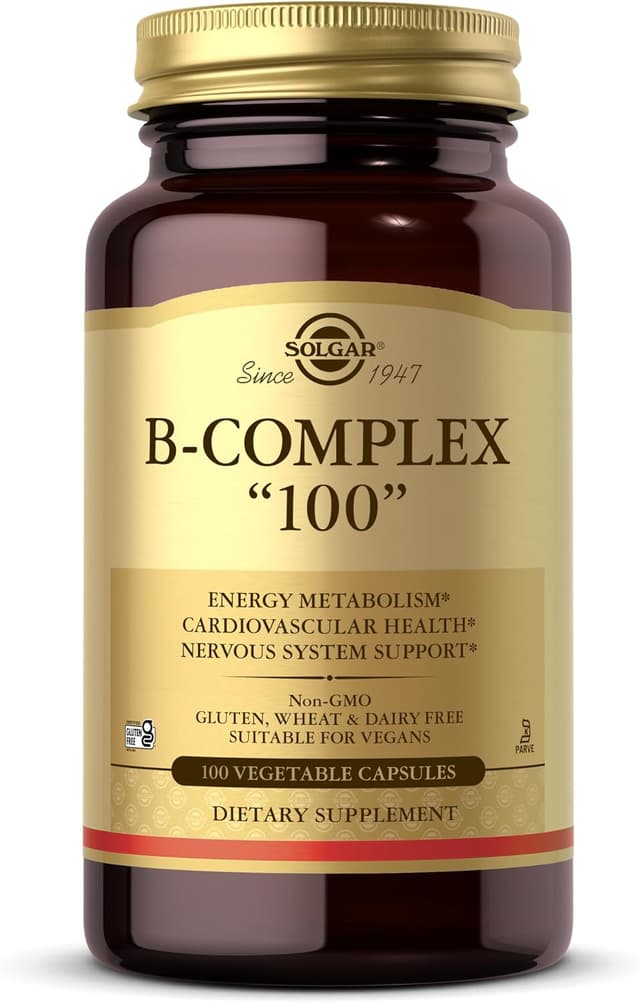
Recommended Vitamin B-Complex Products
As an Amazon Associate we earn from qualifying purchases

AI Analysis
Vitamin B-Complex refers to a group of eight essential B vitamins that play critical roles in maintaining overall health and well-being. These water-soluble vitamins—B1 (thiamine), B2 (riboflavin), B3 (niacin), B5 (pantothenic acid), B6 (pyridoxine), B7 (biotin), B9 (folate), and B12 (cobalamin)—are often taken together as a supplement to support energy production, brain function, and cellular metabolism. They are commonly used to address deficiencies, boost energy levels, support mental clarity, and promote healthy skin, hair, and nails.
Benefits
- Energy Production: B vitamins, particularly B1, B2, B3, B5, and B6, are key in converting carbohydrates, fats, and proteins into usable energy, helping to combat fatigue.
- Brain Health: B6, B9, and B12 support neurotransmitter production and may reduce the risk of cognitive decline and mood disorders like depression.
- Red Blood Cell Formation: B9 (folate) and B12 are essential for producing red blood cells, preventing anemia, and supporting oxygen transport.
- Skin, Hair, and Nail Health: Biotin (B7) is often associated with stronger hair and nails, while other B vitamins support skin regeneration.
- Heart Health: B6, B9, and B12 help regulate homocysteine levels, which, when elevated, are linked to an increased risk of heart disease.
Recent Studies and Conversations from Experts
- A 2023 study published in the Journal of Nutrition highlighted the role of B vitamins, particularly B12 and folate, in reducing homocysteine levels and supporting cardiovascular health. Link
- Dr. Rhonda Patrick, a prominent biochemist, discussed in a 2023 podcast the importance of B vitamins for mitochondrial health and energy metabolism, emphasizing B1 and B2. Link
- A 2022 meta-analysis from the National Institutes of Health (NIH) explored B6 supplementation's potential to improve mood and reduce depressive symptoms in certain populations. Link
- A 2023 article in Nutrients journal examined the synergistic effects of B-complex supplementation on stress reduction and cognitive performance in adults under high stress. Link
- Expert discussion on X by Dr. Chris Masterjohn in early 2023 focused on the necessity of balanced B-complex intake to avoid deficiencies or imbalances when supplementing individual B vitamins like B12. (Note: Direct X link not provided due to platform limitations, but discussed widely in his newsletters.)
Social Media Conversations
- On Reddit’s /r/supplements, users in 2023 frequently mentioned feeling a noticeable energy boost after starting B-complex supplements, though some reported no difference unless they had a confirmed deficiency (anecdotal observation, not expert opinion).
- Posts on X in late 2023 noted improved hair growth with biotin-heavy B-complex formulas, though many users questioned if results were placebo (anecdotal observation, not expert opinion).
- Reddit threads from /r/nutrition in 2023 highlighted user experiences with reduced stress and better focus after consistent B-complex use, with some attributing it to placebo or diet changes (anecdotal observation, not expert opinion).
- X conversations in 2023 showed mixed opinions on whether B-complex supplements cause acne, with some users reporting flare-ups (anecdotal observation, not expert opinion).
- On /r/supplements, several 2023 posts mentioned digestive discomfort as a possible side effect of high-dose B-complex, though not universally experienced (anecdotal observation, not expert opinion).
Natural Sources
- Meat and Fish: Beef, pork, chicken, and fish like salmon and tuna are rich in B12, B6, and B3, providing significant amounts per serving. A 3-ounce serving of beef can provide nearly 100% of daily B12 needs, making meat a practical source for non-vegetarians.
- Eggs and Dairy: Eggs are a good source of B7 (biotin) and B2 (riboflavin), while dairy provides B2. These are accessible but require higher intakes (e.g., 5-6 eggs daily) to meet all B vitamin requirements.
- Whole Grains and Legumes: Foods like oats, wheat germ, and lentils offer B1, B6, and folate (B9). However, you’d need multiple servings daily (e.g., 2-3 cups of lentils) to approach supplemental levels, making them more complementary.
- Nuts and Seeds: Sunflower seeds and almonds provide B6, while Brazil nuts offer some B vitamins alongside other nutrients. These are insufficient as primary sources, as intake would need to be unrealistically high.
- Leafy Greens and Vegetables: Spinach, broccoli, and asparagus are high in folate (B9). While a few cups daily can meet folate needs, other B vitamins are scarce, so they’re not a complete substitute for supplementation. Practical guidance: Natural sources are beneficial and should be part of a balanced diet, but achieving therapeutic or optimal levels of all B vitamins (especially B12 for vegetarians/vegans) from food alone is challenging. Supplementation or fortified foods are often necessary for deficiencies or specific health goals.
Side Effects
- Nausea or Digestive Upset: High doses of B-complex, especially niacin (B3), can cause stomach discomfort or nausea.
- Flushing: Niacin (B3) is known to cause skin flushing, warmth, or itching, particularly at doses above 30 mg.
- Urine Discoloration: Riboflavin (B2) often turns urine bright yellow, which is harmless but surprising to some.
- Nerve Damage Risk: Excessive B6 (pyridoxine) over long periods (above 200 mg/day) can lead to neuropathy or nerve damage.
- Allergic Reactions: Though rare, some individuals report mild allergic reactions like rashes or itching with B-complex supplements.
Sources
- 2023 - Journal of Nutrition: B Vitamins and Cardiovascular Health Link
- 2023 - Dr. Rhonda Patrick Podcast: B Vitamins for Energy and Mitochondrial Health Link
- 2022 - NIH Meta-Analysis: Vitamin B6 and Mood Improvement Link
- 2023 - Nutrients Journal: B-Complex Effects on Stress and Cognition Link
- 2020 - NIH Fact Sheet on B Vitamins (Further Reading) Link
Research Summary
Vitamin B-complex is a group of eight water-soluble vitamins that work together to support essential bodily functions including energy production, brain health, nervous system function, and cellular metabolism. These vitamins help convert food into usable energy and play crucial roles in maintaining overall health and well-being.
Benefits
Energy Production and Fatigue Reduction B-complex vitamins are essential for converting carbohydrates, fats, and proteins into cellular energy (ATP). A 2024 study found that 28 consecutive days of B-complex supplementation significantly increased running time to exhaustion by 1.26-fold and reduced exercise fatigue markers like blood lactate and ammonia levels in non-athletes.
Brain Function and Cognitive Health B vitamins support optimal brain and nerve functioning. They help produce neurotransmitters and support brain cell development, with research indicating that adequate B vitamin levels are essential for cognitive performance. However, recent research notes that people with low B12 and high folic acid concentrations showed cognitive issues, suggesting balance is important.
Nervous System Support B vitamins maintain proper nerve function and support the production of stress hormones and neurotransmitters like serotonin and norepinephrine. Pyridoxine (B6) and folate (B9) are particularly important for nervous system health.
Immune System Function B6 and folate help produce white blood cells and T cells needed to fight infections. Folate deficiency has been linked to increased infection risk.
Cardiovascular Health B vitamins help lower homocysteine levels and improve cholesterol profiles, reducing heart disease risk. However, meta-analyses of 17 and 12 trials involving over 86,000 participants found that while B vitamins reliably reduced homocysteine, they showed no protective effect against cardiovascular events or mortality.
Skin, Eye, and Hair Health Individual B vitamins support various aspects of skin, eye, and hair health, with deficiencies causing dermatitis, conjunctivitis, and hair loss.
Recent Studies and Expert Research
Exercise Performance Study (2024) A randomized double-blind crossover study published in Medical Science Monitor found that B-complex supplementation (Ex PLUS®) containing B1, B2, B6, and B12 plus taurine and vitamin E significantly improved exercise endurance and reduced fatigue biomarkers in healthy adults over 28 days, with no adverse effects at appropriate doses.
Natural vs. Synthetic Comparison (Ongoing) A clinical trial registered on ClinicalTrials.gov is investigating bioavailability and long-term effects of natural B-complex versus synthetic formulations, as literature previously lacked clear comparisons between the two forms.
Brain Health Review (2022) A comprehensive PMC review concluded that supplementation with the entire B-complex group is more rational than selecting individual B vitamins, as they perform closely inter-related roles in cellular functioning. The review noted that while B vitamins are essential for brain health, evidence for specific disease prevention remains equivocal.
Neuropsychiatric Research (2025) Recent research published in Frontiers in Psychiatry is exploring connections between B-complex deficiencies and neuropsychiatric conditions, with riboflavin (B2) deficiency linked to mood disorders, cognitive decline, and Parkinson's disease.
Social Media Insights
Community discussions on r/supplements frequently highlight B-complex as a popular choice for energy and mood support. Users commonly report subjective improvements in energy levels and mental clarity within 1-2 weeks of supplementation, though experiences vary widely. Some users note that taking B-complex in the morning helps avoid sleep disruption, while others report mild stomach upset if taken on an empty stomach. Many community members emphasize the importance of taking B-complex with food and water for better absorption, as mentioned in professional guidance.
Natural Sources
Meat and Fish Beef, chicken, and fish contain B vitamins, particularly B12, B6, and niacin. However, you would need to consume significant quantities daily to match therapeutic supplement doses—for example, obtaining 2.4 mcg of B12 from beef alone would require eating several ounces daily.
Eggs and Dairy Eggs and milk products provide B2, B5, B7, and B12. One egg provides meaningful amounts of several B vitamins, making dairy and eggs practical complementary sources.
Whole Grains and Legumes Fortified cereals, brown rice, lentils, and beans contain B1, B3, and folate. Many whole grain products are enriched with B vitamins, making them viable dietary sources, though absorption may be lower than supplements.
Leafy Greens Spinach, kale, and other dark leafy greens provide folate (B9). A single serving of cooked spinach can provide a substantial portion of daily folate needs, making this a practical natural source.
Nutritional Yeast Nutritional yeast is exceptionally rich in B vitamins, particularly B12 in fortified versions, making it one of the few plant-based sources that can provide meaningful amounts of B12. Just 1-2 tablespoons can provide significant B vitamin content.
Practical Context While B vitamins are found in many foods, obtaining therapeutic amounts from diet alone is challenging for most people, particularly B12 for vegans and vegetarians. A balanced diet can provide baseline B vitamin intake, but supplementation is often necessary for those with deficiencies, specific health goals, or dietary restrictions.
Side Effects
Generally Well-Tolerated at Standard Doses B vitamins are water-soluble, meaning excess amounts are typically excreted through urine, making toxicity uncommon at recommended doses. The 2024 exercise study found no adverse effects from B-complex supplementation at appropriate doses.
Vitamin B6 Toxicity The European Food Safety Authority established a tolerable upper intake level (UL) of 12 mg/day for vitamin B6 in adults due to risk of peripheral neuropathy (nerve damage) with excessive intake. Standard B-complex supplements typically contain 1.3-2.0 mg, well below this threshold.
Gastrointestinal Upset Some users report mild stomach upset or nausea when taking B-complex on an empty stomach. Taking supplements with food and water improves absorption and reduces this risk.
Rare Allergic Reactions Though uncommon, some individuals may experience allergic reactions to B-complex supplements or specific fillers in formulations.
Sleep Disruption Some users report that taking B-complex later in the day may interfere with sleep, likely due to the energizing effects of B vitamins. Morning dosing is generally recommended.
Interactions with Medications B vitamins may interact with certain medications, so consulting a healthcare provider is important if you take prescription drugs.